| Okanagana balli, the prairie cicada | Ephemeral Wetlands | Soil building | ||
![]() |
Map of James Woodworth Prairie showing wetlands (at their maximum size) and the research grid. Intersections of grid lines are marked by monuments which are shown as points on map. MS = Milwaukee swale Grid lines are 10m apart (except 1 & 2 and K & L). Lettered lines (A to L) run east/west and numbered lines (1 to 25) run north (map made by Wyatt Gaswick) |
|||
|
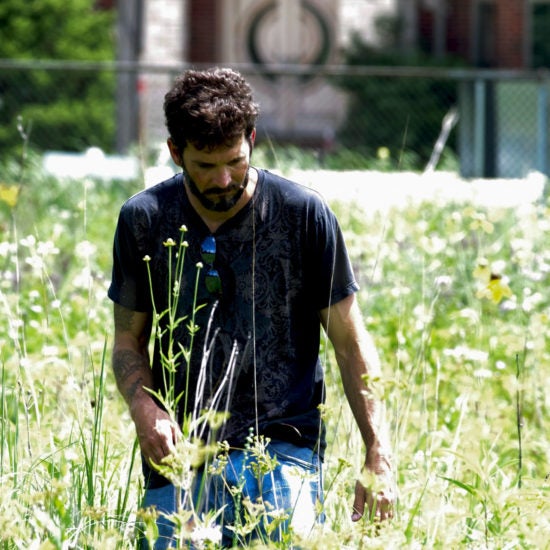
Erin Haase Faulkner taking a plant inventory break |
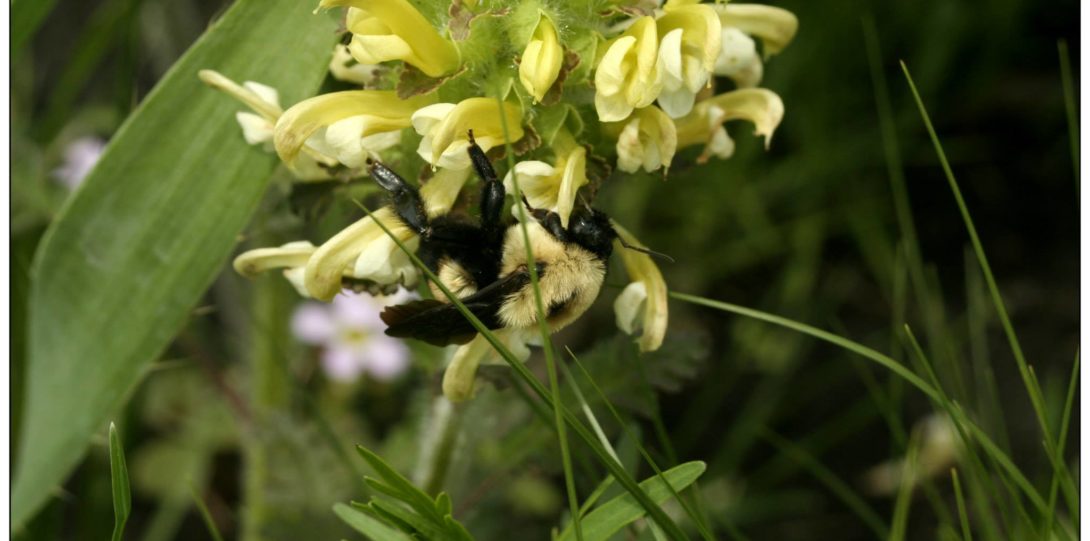
Okanagana balli, the prairie cicada Cicadas are important in prairies. There are at least 3 cicada species in the Konza prairie in Kansas. Some prairie cicadas are very large and very colorful, these are in the genus Tibicen. At JWP there is a small cicada (even a small cicada is still a big insect), Okanagana balli. If you are at prairie in late June you will hear the male cicada singing. Even when you can hear the song, seeing it is not all that easy. In 2007 the 17 year cicada with its bright red eyes emerged at JWP, I was surprised as I thought they were confined to woodlands. Okanagana balli is about an inch long and has only drab shades of brown for color. It is restricted to remnant (original vegetation) sites and is not known from reconstructions (=restorations). A mark/recapture study estimated the Woodworth population as about 500 individuals. They are rarely heard after 4 July. If you would like to see a slide show of a talk presented at the Prairie Invertebrate Conference here in Chicago 29 Oct 05 click here. |
|||
|
Gaswick's emergence trap in an ephemeral pond |
Ephemeral Wetlands Most Illinois prairie remnants are pioneer cemeteries. Well-drained locations were chosen for cemeteries, so prairie ephemeral wetlands are now very rare. Wyatt Gaswick's MS project was to inventory the invertebrates living in the JWP wetlands. Because prairie wetlands are rare, we expected to find some rare invertebrates, but this has not proved to be the case. The species found in these very short hydroperiod wetlands include: Simocephalus vetulus,
Simocephalus exspinosus, Limnephilus submonilifer, Acanthocyclops vernalis, Attheyella illinoisensis, Cypridopsis vidua and Phagocata velata. The largest wetlands have the greatest species diversity and the species found in the shortest hydroperiod wetlands are also found in the bigger wetlands. |
SOUTHEAST, a wetland that holds water for only short (less than a week) periods. |
||
|
A capped crayfish mound. |
Ants are also important in soil building. (Frank Mayfield photo) |
Soil Building The 40 cm deep prairie soils have been built in the 15,000 years since the glaciers melted. How did the soil get so thick in that short time? Paul Orlando studied rates of mound building and learned crayfish move a lot of soil, adding 0.3 mm to surface each year. Unlike mammals, ants and worms the soil moved to the surface by crayfish was below topsoil. |
Procambarus gracilis, a burrowing crayfish. |
|
Extinction and colonization rates from inventories Plant species lists for Woodworth Prairie exist for 1929, 1969, 1984 and 2000 (see Bibliography). I (DN) adopted a single
taxonomic authority (Swink and Wilhelm 1994) to provide legitimate names. Standardizing spelling mistakes, capitalization, and the like converted each list into legitimate names. Legitimate names included some species unlikely to have been at JWP based on distribution and presence of other species in genus and distinctiveness of taxon. For each taxon a four-character sequence shows which list(s) include the species. PPP0, for instance, means a species was
found on the 1929, 1969, and 1984 lists but not on the 2000 list. Slide show of the study. Erin Haase Faulkner conducted a 2005 plant inventory that is not included. |
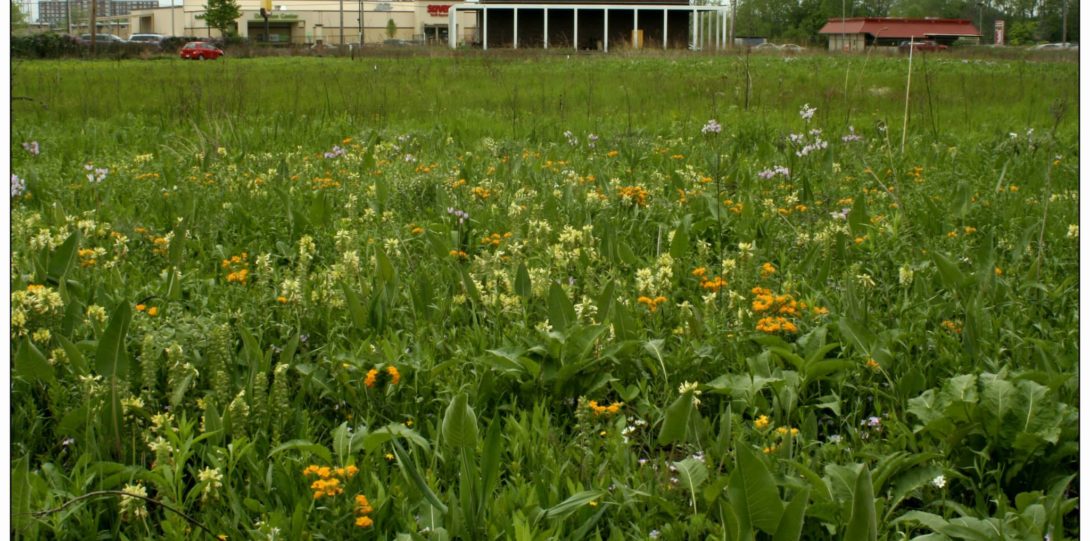
How many prairie species can you see? Besides butterflyweed, I see prairie dock and culver's root. |
|||