|
Structural Health Monitoring of civil structures requires selection and placement of sensors suitable for measurement of key parameters that influence the performance and health of the structural system. Some of the primary issues of concern that impede rapid implementation of sensor technologies include large size of structures, diversity of construction materials, need for multiplexing and distributed sensing, harsh construction environment, adverse exposure conditions, long term reliability and durability, and in existence of sensors for measurement of relevant parameters of importance in civil structures.
The Workshop’s Goal is to develop a coordinated research program addressing issues related to sensor packaging, attributes, construction site and placement issues, durability, reliability, multiplexing, distributed sensing, standards and specifications, data acquisition and interrogation systems. The final products of the workshop will be in the form of a hardbound book detailing the state-of-the-practice, and a comprehensive report outlining a detailed plan for research. |
|
Challenges in Health Monitoring of Civil Structures Some of the primary technological challenges that need to be resolved for SHM of civil structures are highlighted below:
- Configuring the sensor for sensing parameters of relevance, i.e. cracks, forces, corrosion, deflections, etc.
- Sensor packaging for a diverse set of materials and structural elements such as concrete decks, rebars, steel cables, structural steel, FRP sheets and tendons
- Installation problems due to harsh construction environment
- Calibration and referencing for long term sensing
- Sensor packaging and durability
- Long-term stability and survivability
- Long term reliability
- Multiplexing and distributed sensing
- Dynamic range, resolution and sensitivity
- Data acquisition, leads in and out of the structure
- Sensor calibration and referencing for permanently embedded sensors
- Data acquisition, analysis, and management
This list is not exhaustive, but it serves to illustrate some of the characteristic problems that need to be addressed in civil structural health monitoring. In essence, addressing these issues requires:
- Synthesis of available sensing technologies and verification of their relevance to structural systems
- Determination of the developmental stage of the technologies
- Evaluation of the barriers that prevent implementation
- Development of timelines for a coordinated R&D plan
- Identify appropriate test beds for demonstration projects
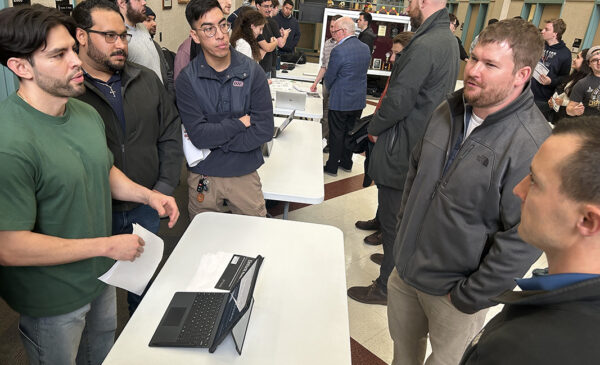
These goals will be accomplished through the work of the technical committees of the workshop. The principal objective of the workshop will be the formulation of a five-year sequential research and development program for expeditious implementation of sensor technology in civil structural health monitoring. Engineers and scientists from the academia, industry and government will gather at this workshop to present the current status of their work and to discuss the state-of-the-art in the applications of these technologies for condition monitoring of constructed facilities. Workshop results will be synthesized in a report. This report will be used for establishment of the layout for a coordinated civil engineering related research implementation plan. Global representation of research ingredients necessary for successful implementation of a coordinated R&D program for civil structural health monitoring
Global representation of research ingredients necessary for successful implementation of a coordinated R&D program for civil structural health monitoring
Technical Committees of the Workshop
The technical activities of the workshop will be implemented through the work of the workshop committees. Committee members are comprised of the invited participants. They will develop the R&D plans in three separate committees that are outlined below. Their recommendations will be forwarded to the research steering committee for approval and endorsement by the international organizing committee of the workshop.
Technical Committees of the Workshop
Committee - 1 – Sensor Attributes and Placement Issues
Committee - 2 – Sensor Reliability for long term monitoring
Committee - 3 – Standards and Specifications
|
|
|
|