At the forefront of patient care and research, the Department of Neurology and Rehabilitation at University of Illinois College of Medicine envisions growth and integration within the clinical neurosciences, enhancing its community presence. The department is dedicated to interconnecting clinical, basic, and translational research programs to deliver improved patient care, exceptional learning opportunities, and innovative cures. With outstanding training programs attracting top-tier students and faculty, our most valuable assets are our dedicated team of faculty, residents, fellows, and students. The department’s boundless opportunities center around research and multidisciplinary clinical programs, distinguishing it and bringing prestige to the hospital and community.
Education Heading link
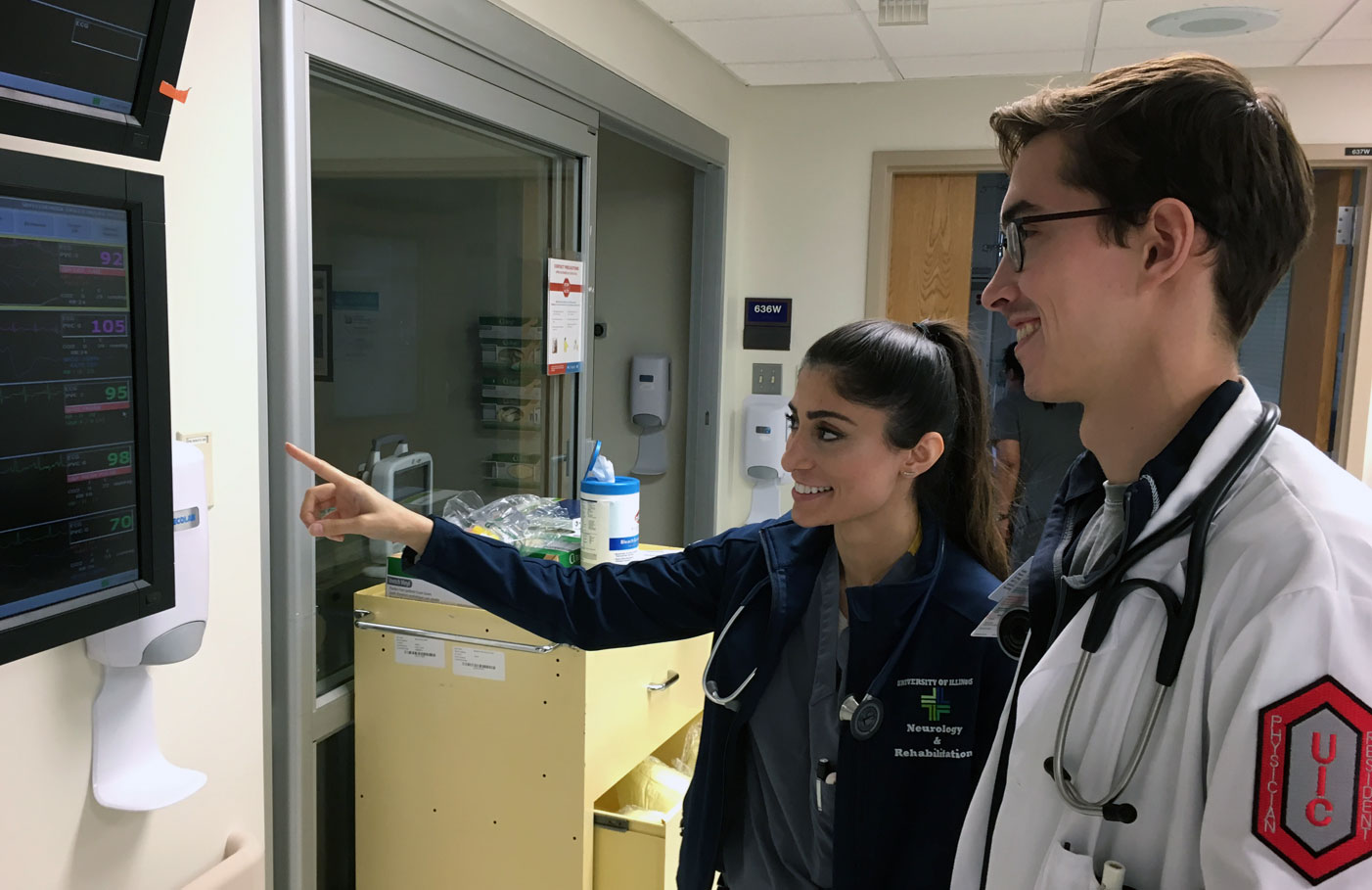
Learn more about our residency program
The Department offers seven fellowships.
links
Offerings for medical students
Summer Vascular Neurology Program
Department News Heading link